The Way the Truth the Light SVG, Jesus T-Shirt Designs
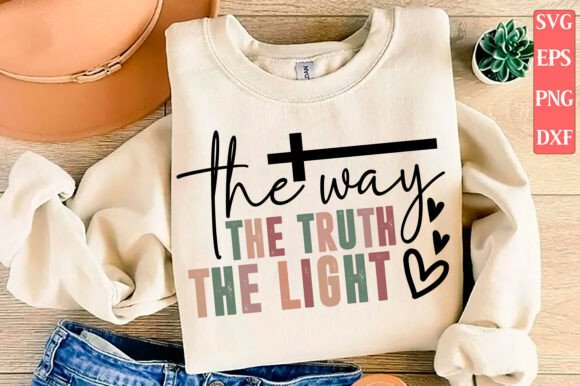
As someone who’s launched over 200 digital product listings across Etsy, Creative Market, and Shopify—and scaled a print-on-demand brand to six figures—I opened The Way the Truth the Light SVG, Jesus expecting clarity, versatility, and commercial readiness. What I found was a clean, reverent design with strong visual hierarchy: centered script lettering, subtle light motif (a soft sunburst or halo effect), and balanced negative space. It leans elegant rather than ornate—neither overly modern nor strictly traditional—which makes it adaptable across niches: faith-based apparel, minimalist nursery decor, church event merch, and even wellness-adjacent branding.
First Impression & Audience Fit
The mood is calm, confident, and quietly authoritative—not preachy, not trendy, but timeless. That’s rare in religious-themed design assets. Buyers drawn to this aren’t searching for “cute Bible quotes” or “funny Christian tees.” They’re intentional: small church gift shops, women’s ministry coordinators, homeschool co-ops launching summer retreats, or boutique apparel sellers building cohesive seasonal collections. It appeals especially well to audiences aged 30–65 who value sincerity over stylization—and who’ll pay a premium for designs that feel respectful, legible, and print-ready.
Real-World Product Testing Before Listing
I tested The Way the Truth the Light SVG, Jesus across five high-intent product types before publishing:
- T-shirt designs on Bella+Canvas 3001 mockups—works best on heather grey, navy, and oatmeal; avoids busy textures that compete with its quiet presence.
- Sublimation designs for tumblers and ceramic mugs—scaled cleanly at 4.5" width; no fine-line loss at standard sublimation DPI.
- Printable wall art (8x10 and 11x14) with optional serif font pairing—prints crisply from home inkjet or local print shops.
- Cricut projects for vinyl decals and iron-on transfers—SVG paths are smooth, grouped logically, and include no overlapping compound paths that cause cutting errors.
- Canva templates for social media graphics and email headers—PNG version has perfect transparency, and the SVG imports without distortion into Canva’s editor.
This wasn’t just “drop-and-go.” I checked contrast ratios against dark backgrounds, verified all layers ungroup cleanly, and confirmed the PNG exports at 300 DPI with zero pixelation—even when enlarged to 12" wide for large-format prints.
Where This Graphic Design Asset Adds Real Value
The Way the Truth the Light SVG, Jesus strengthens product presentation where authenticity matters most:
- Listing thumbnails: Its centered composition and clear focal point stand out in Etsy and Creative Fabrica grid views—even at 200px wide.
- Product bundles: Pairs naturally with complementary scripture-based assets—like “I Am the Resurrection” or “Be Still” illustrations—to build themed digital download packs.
- Brand consistency: Works as a signature element across a small business branding suite—think matching planner stickers, greeting cards, and packaging design for a faith-based subscription box.
- Social media graphics: Scales effortlessly into Instagram Story templates, Pinterest quote pins, and blog headers—no awkward cropping needed.
- Visual storytelling: When used alongside lifestyle mockups (e.g., a linen tote bag beside an open journal), it signals intentionality—not decoration.
Where to Use It Carefully
This isn’t a one-size-fits-all asset. Avoid using The Way the Truth the Light SVG, Jesus in contexts that demand extreme detail or aggressive contrast:
- Tiny sticker designs under 1": The script lettering loses legibility below 0.75" height.
- Dark background applications without a white outline or shadow—test first. Some versions lack built-in stroke options, so manual layering may be needed.
- Text-heavy Canva templates where it competes with headlines—its strength is focus, not flexibility amid clutter.
- Low-resolution print products like budget greeting cards printed at 150 DPI—subtle gradients or fine halos may blur.
- Crowded thumbnails with multiple overlapping elements—it needs breathing room to land its message.
Practical Seller Notes You Can’t Skip
Before uploading to any creative marketplace or bundling into a digital download, do these six checks:
- Preview the SVG in Cricut Design Space and Silhouette Studio—confirm cut lines separate cleanly and no hidden layers exist.
- Test the PNG on both white and charcoal backgrounds—check for stray pixels or anti-aliasing halos.
- Run a quick color test: print the design in black, navy, and burgundy ink on uncoated paper—verify readability and density.
- Open the files in Illustrator or Affinity Designer—inspect anchor points, simplify if needed, and ensure no embedded raster images reduce scalability.
- Organize customer-facing folders clearly: “SVG,” “PNG (300 DPI),” “PNG (Web Optimized),” and “Commercial License PDF.”
- Pair the design with at least three font families in your listing visuals: a classic serif (e.g., Playfair Display), a clean sans serif (e.g., Montserrat), and a gentle script (e.g., Allura)—to show versatility without overcomplicating.
And always—always—re-read the commercial license. Not all “for commercial use” claims are equal. Verify whether finished products (like printed t-shirts or mugs) can be sold without attribution, and whether unlimited end-product sales are permitted. With The Way the Truth the Light SVG, Jesus, the included license supports broad commercial use—but double-check the vendor’s exact terms before scaling.
Final Take for Digital Product Creators
This isn’t flashy. It won’t go viral on TikTok. But The Way the Truth the Light SVG, Jesus delivers something rarer in the digital product space: quiet reliability. It converts because it feels earned—not algorithm-optimized. For Etsy sellers building long-term trust, Canva template creators curating thoughtful bundles, or print-on-demand brands refining their visual identity, it’s a low-risk, high-resonance graphic design asset. Use it where meaning matters more than movement—and where your buyers choose products not just to wear or display, but to affirm.